Where To Buy Air Mover In Toronto: Room Drying Tips Inside
By: Brothers Equipment And Supply
Drying a damp room quickly and efficiently is essential to prevent water damage, mould growth, and lingering odours. Whether you’re dealing with a minor plumbing leak or major flooding, an air mover is a powerful tool that accelerates the drying process.
For Canadian homeowners and contractors alike, choosing the right air mover requires understanding your environment, the features that matter, and how different types perform.
This guide will help you make an informed purchase tailored to your specific drying needs.
Where To Buy Air Movers In Toronto?
You can shop for an air mover on specialty water damage restoration equipment shops like Brothers Equipment And Supply, we have prices 30% lower than the big box stores and offer free shipping across Canada and the USA. Pick up is available as well.
You can also shop around on marketplaces like Facebook, Kijiji, Amazon.
Popular brands available in Canada include:
Expect to pay between $150–$400 for a quality residential unit, while commercial models may range from $500 to $1,200+.
Renting Vs Buying An Air Mover
If you’re dealing with a one-time emergency or rare use case, renting may be the more cost-effective solution.
Rental costs typically range from $30 to $60 per day. If multiple rooms or repeat use is expected, purchasing becomes more economical over time.
What Is An Air Mover And How Does It Work?
An air mover is a high-powered fan designed to circulate large volumes of air at a rapid pace. Unlike a typical household fan, air movers are specifically engineered to dry surfaces, speed up evaporation, and manage moisture levels in enclosed spaces.
Air movers function by creating airflow that moves moisture away from wet surfaces into the air, where it can be captured and removed by a dehumidifier. They are commonly used in flood restoration, post-construction cleanups, and carpet drying.
When And Why You Need An Air Mover
Air movers are ideal for many situations, including:
Prompt drying is essential to prevent mould, which can begin to develop within 24 to 48 hours of water exposure according to the Canadian Centre for Occupational Health and Safety (CCOHS).
Regions with higher humidity levels, such as British Columbia and southern Ontario, especially benefit from air movers during spring and summer months.
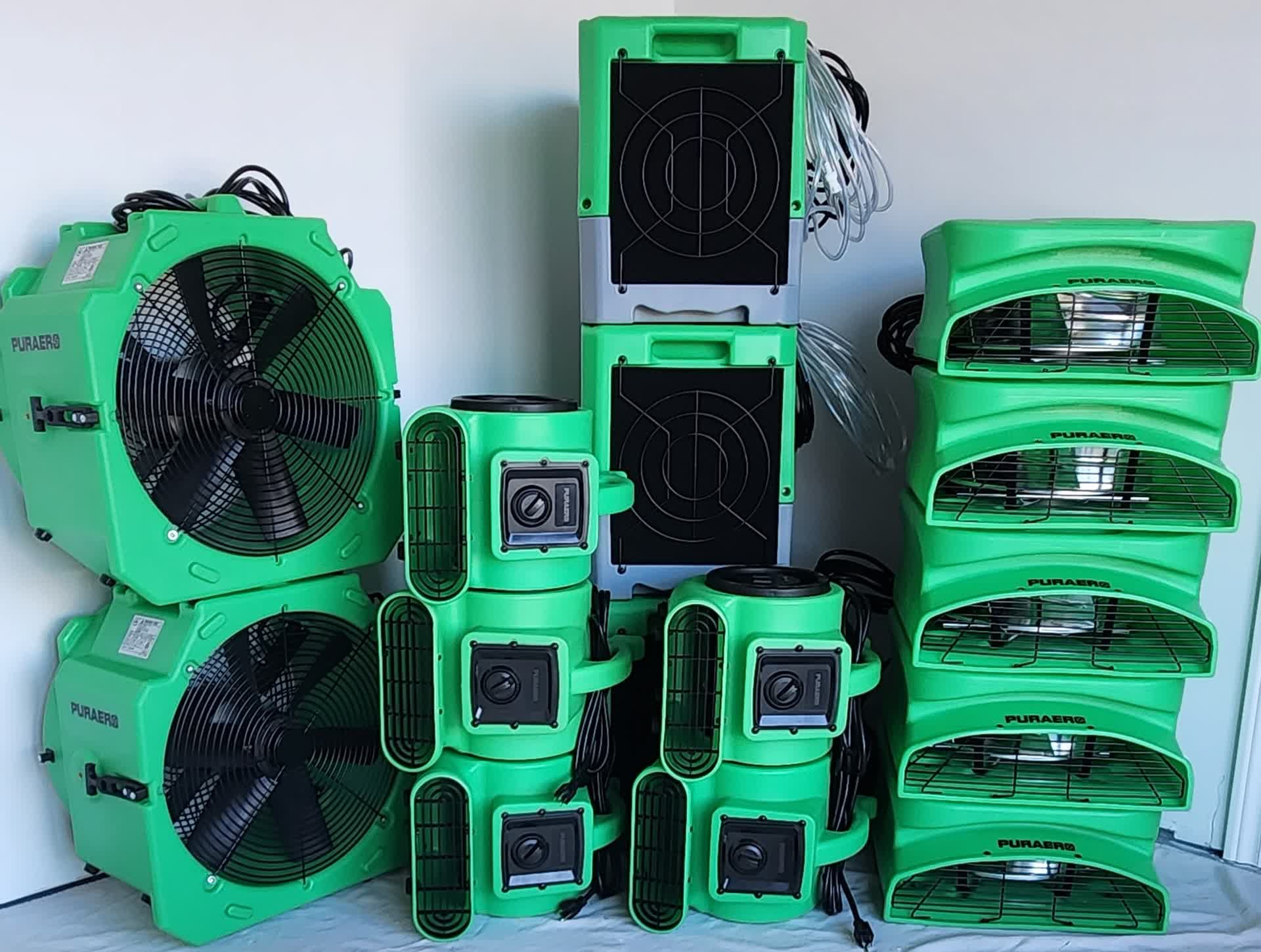
There are three main types of air movers available on the Canadian market:
Axial Air Movers
These are designed for moving large volumes of air across wide spaces. They are ideal for general drying tasks in open areas such as living rooms, basements, or warehouses. Axial fans are usually less powerful in focused airflow but offer higher overall airflow capacity.
Centrifugal Air Movers
These units produce a more concentrated air stream, making them perfect for directing airflow under cabinets, carpets, or tight corners. They are popular for water damage professionals because of their versatility.
Low-Profile Air Movers
Slim and compact, these are used in tight spaces, such as under furniture or staircases. They offer flexibility and are often stackable for easy storage.
Airflow Power (CFM)
CFM, or cubic feet per minute, measures the volume of air moved. Residential models typically range from 500 to 2,000 CFM, while commercial units may exceed 3,000 CFM. Choose according to the size of your space and severity of the water exposure.
Adjustable Speeds
Variable speed settings allow for greater control over airflow, helping to balance drying efficiency with noise and energy use.
Weight And Portability
Lightweight models (under 30 lbs) are easier to move from room to room. Look for units with ergonomic handles or built-in wheels.
Stackability
Contractors or property managers may prefer stackable models for convenient transport and storage.
Safety Features
Models with GFCI outlets protect against electrical shock, especially important in wet environments.
Noise Levels
Look for models with noise levels under 70 dB for residential use. For comparison, normal conversation sits at about 60 dB.
Energy Efficiency And Environmental Considerations
Choose models with energy-efficient motors to reduce electricity costs, especially if used for prolonged periods. Energy Star-rated dehumidifiers combined with efficient air movers can reduce the energy load significantly.
Eco-conscious buyers may also look for durable, recyclable housing materials and companies that offer repairable components rather than disposable units.
Proper placement and usage will maximise drying efficiency:
For flood recovery, running the air mover continuously for 24 to 72 hours may be necessary, depending on moisture levels and room size.
All three are widely reviewed and recommended for durability, effectiveness, and value.
Proper maintenance ensures longer lifespan and consistent performance:
Avoid storing units in freezing temperatures unless specified by the manufacturer.
Choosing the right air mover can significantly reduce drying time, prevent mould, and protect your home or workspace from long-term moisture damage.
By understanding your specific needs, evaluating product features, and sourcing from trusted Canadian retailers, you’ll be equipped to handle any water-related emergency with confidence.
What Size Air Mover Do I Need For A Bedroom?
For an average-sized bedroom (150–200 sq. ft), a unit with 500 to 1,000 CFM is typically sufficient.
Can I Leave An Air Mover On Overnight?
Yes, most air movers are designed to operate continuously for days at a time. Always follow manufacturer guidelines.
Do Air Movers Help Prevent Mould?
Yes, by speeding up drying, they reduce the chance of mould, which can start forming within 24–48 hours of water exposure.
How Long Should I Run An Air Mover?
Drying time varies, but 24 to 72 hours is common for water damage. Use a moisture meter to check progress.
Are Air Movers Loud?
Noise levels range between 60–90 dB. Choose models under 70 dB for quiet operation in living spaces.
Can I Use An Air Mover Without A Dehumidifier?
Yes, but combining both offers faster and more complete moisture removal.
Do Air Movers Use A Lot Of Electricity?
Most models range from 1 to 3 amps. Running one 24/7 may add $1–2/day to your energy bill depending on your utility rates.
Where Should I Position The Air Mover?
Angle it across wet surfaces, preferably creating cross-flow by pointing toward a doorway or window.
Are Commercial Models Better For Home Use?
They are more powerful but may be overkill for small spaces. Consider your drying needs before investing.
Can I Use An Air Mover In Winter?
Yes, but ensure the room temperature stays above freezing, and be cautious of condensation if the space is not heated.
If you have any questions about our article, “Where To Buy Air Mover In Toronto: Room Drying Tips Inside” or need an air mover to dry a room in Toronto, call us at 416-912-2205 or connect with us on social media.
Related Products
Tips On How To Buy A Desiccant Dehumidifier By: Brothers Equipment And Supply Choosing the…
How To Choose The Right Dehumidifier For A Cannabis Grow Operation By: Brothers Equipment And…
Where To Buy Floor Carpet Fans: Must-Know Tips By: Brothers Equipment And Supply Floor carpet…
How Do I Improve Indoor Air Quality And What Can I Buy? By: Brothers Equipment…
10 Reasons Air Movers Are The Unsung Heroes Of Restoration By: Brothers Equipment & Supply…
Where to Find Water Damage Equipment In Toronto? By: Brothers Equipment And Supply Water damage…