Top Tips For Buying An Industrial Dehumidifier In Toronto
By: Brothers Equipment And Supply
If you work in restoration, construction, or facility management, you already know how destructive excess moisture can be. The right industrial dehumidifier can make the difference between a quick recovery and a costly shutdown.
In Canada’s diverse climate — where humidity swings from coastal dampness to bone-dry prairie air — moisture control is both an art and a science.
According to Natural Resources Canada, over 60% of indoor structural issues in commercial properties are caused by excess moisture or mould growth.
Whether you’re drying out a flooded warehouse or managing humidity in a manufacturing facility, here are the top tips for buying the perfect industrial dehumidifier for your business.
Let’s get right into it.
Industrial dehumidifiers remove excess moisture from the air, creating stable conditions for equipment, inventory, and structures.
Unlike small home models, these machines are designed for continuous operation, higher airflow, and large spaces.
They work by pulling in humid air, cooling it to condense moisture, and expelling drier air back into the room. Some models use desiccant wheels or chemical materials to absorb moisture, which makes them ideal for colder climates or unheated spaces.
Common industries that rely on dehumidifiers include:
Selecting the right dehumidifier isn’t just about drying faster — it’s about protecting assets and reducing operating costs.
Too small of a unit will struggle to keep up, leading to prolonged drying times and higher energy use. Too large, and you waste power and money.
The Canadian Construction Association recommends maintaining 30%–50% relative humidity for most industrial settings. Anything above that risks mould growth, corrosion, and poor air quality. The right dehumidifier helps you hit that target efficiently.
There are three main types:
Refrigerant Dehumidifiers use compressors and coils to condense moisture — ideal for warm, humid spaces.
Desiccant Dehumidifiers use moisture-absorbing materials to work effectively in cold or dry environments. They’re popular for winter construction and northern regions.
Hybrid Models combine both systems for flexibility across temperature ranges.
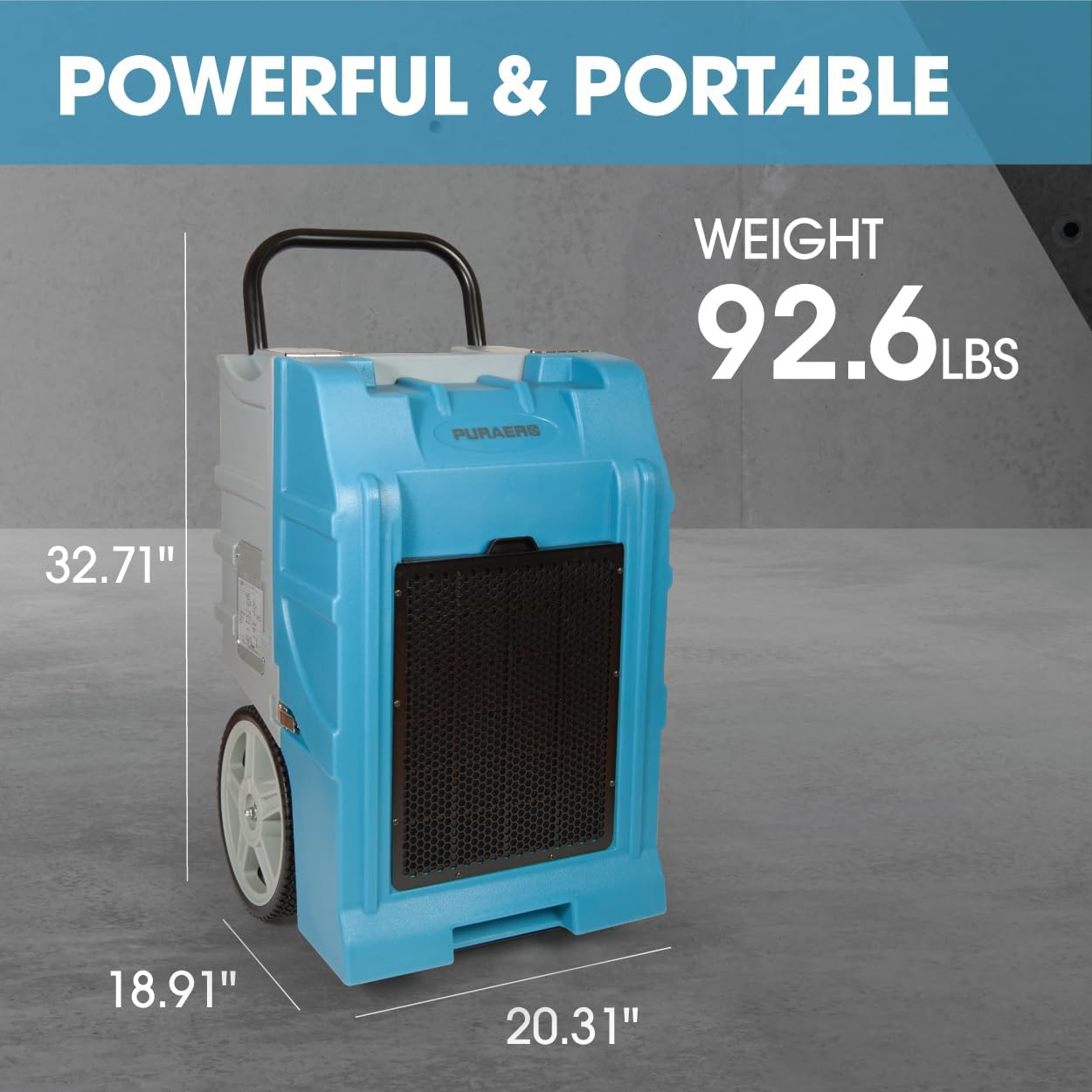
Portable units are perfect for job sites, while stationary units suit warehouses or large commercial spaces.
Understanding specifications ensures you get performance that matches your needs:
If you see “LGR” on a dehumidifier, it stands for Low Grain Refrigerant — a technology that cools air twice for deeper moisture extraction.
Compared to standard models, LGR dehumidifiers can remove up to 30% more water and perform better in cooler conditions. This makes them ideal for Canadian environments where humidity can drop after the initial drying phase.
They’re also more energy-efficient and last longer, though they come at a higher upfront cost.
Power efficiency is a must in continuous-use industries. An energy-efficient dehumidifier uses less electricity, produces less heat, and operates quietly.
Energy Star-certified models can reduce power consumption by up to 25% annually. According to Hydro One, energy-efficient commercial appliances can pay for themselves in as little as two years.
Eco-conscious buyers should look for R410A refrigerant, which is ozone-safe, and auto-defrost systems that improve longevity and performance in cold environments.
Industrial dehumidifiers are built for punishment — but not all are equal. Look for:
Modern dehumidifiers come with built-in tech to simplify your workflow:
These features are invaluable for restoration professionals managing multiple sites.
Like any industrial machine, proper maintenance extends lifespan and ensures efficiency:
With routine maintenance, most industrial units can last 8–10 years or longer.
Industrial dehumidifiers can range from $1,500 to $10,000+, depending on capacity and features.
Paying a bit more upfront for efficiency and durability saves long-term costs in hydro bills, repairs, and replacement frequency.
For small contractors, mid-range LGR models strike the best balance between portability and power. For restoration or large-scale industrial operations, investing in high-capacity, low-amp models delivers the best ROI.
Some of the top professional-grade brands available in Canada include:
Purchase from Canadian distributors to ensure CSA approval, proper voltage standards, and warranty support.
Investing in an industrial dehumidifier is about more than drying air — it’s about protecting your property, your productivity, and your profits.
The right model should balance capacity, efficiency, durability, and smart features. Whether you’re a restoration company or managing an industrial facility, choosing wisely will keep your environment safer, your air cleaner, and your business running smoothly — no matter how humid things get.
What’s The Ideal Humidity Level For Industrial Spaces?
Aim for 30%–50% relative humidity to prevent mould, corrosion, and material warping.
What’s The Difference Between LGR And Desiccant Dehumidifiers?
LGR uses refrigerant cooling, ideal for warm spaces, while desiccant uses chemical absorption, ideal for cold or dry conditions.
How Often Should I Clean My Dehumidifier Filters?
Every week under heavy use and monthly for lighter applications to maintain airflow and efficiency.
Do Industrial Units Use A Lot Of Power?
They’re designed for efficiency. Energy Star models can use up to 25% less power than standard units.
Can Industrial Dehumidifiers Run 24/7?
Yes. Most models are rated for continuous operation with automatic defrost and pump systems.
What’s The Average Lifespan Of An Industrial Dehumidifier?
Typically 8–10 years with proper maintenance and part replacement.
Are Portable Units Powerful Enough For Large Spaces?
Yes, high-capacity portable LGR units can handle up to 1,000–1,500 sq. ft. per machine.
Do Dehumidifiers Help Prevent Mould?
Absolutely. Keeping humidity below 50% stops mould growth and improves air quality.
Is It Worth Buying A Smart Dehumidifier?
Yes — remote monitoring and automatic reporting save time, especially for restoration pros.
Where Can I Buy Industrial Dehumidifiers In Canada?
Look for certified resellers and distributors in Ontario, Alberta, and B.C., or order from national suppliers that offer CSA-approved equipment.
Tips On How To Buy A Desiccant Dehumidifier By: Brothers Equipment And Supply Choosing the…
How To Choose The Right Dehumidifier For A Cannabis Grow Operation By: Brothers Equipment And…
Where To Buy Floor Carpet Fans: Must-Know Tips By: Brothers Equipment And Supply Floor carpet…
How Do I Improve Indoor Air Quality And What Can I Buy? By: Brothers Equipment…
10 Reasons Air Movers Are The Unsung Heroes Of Restoration By: Brothers Equipment & Supply…
Where to Find Water Damage Equipment In Toronto? By: Brothers Equipment And Supply Water damage…