Basement Dehumidifier Buyer Guide: Must-Know Tips Before Buying Inside
By: Brothers Equipment & Supply
For many Canadian homeowners, the basement and crawlspace are the primary battlegrounds against excess moisture.
Left unchecked, this humidity can lead to mould growth, structural damage to your home’s foundation, and can exacerbate health issues like allergies and asthma.
The most effective weapon in this fight is a reliable dehumidifier.
This guide will walk you through everything you need to know to select the perfect unit for your Canadian home.
Not all dehumidifiers are created equal. Understanding these key features will ensure you invest in a unit that effectively meets your needs.
Capacity Is King
Capacity is measured in pints of water removed per 24 hours. Your choice here is critical. A small 30-pint unit may suffice for a dry basement that feels slightly damp in the summer.
However, for a consistently wet, large basement or a damp crawlspace, you will want a 50 to 70-pint unit. Choosing a unit that is too small will cause it to run constantly without ever reaching the desired humidity level, wasting energy and wearing out the compressor prematurely.
The Lifesaver: A Built-In Pump
Perhaps the most convenient feature for basement use is a built-in condensate pump. While all dehumidifiers have a collection bucket and most can gravity-drain through a hose, a pump allows you to drain the water upwards into a sink or through a window well. This is invaluable if your floor drain is inaccessible or your basement layout makes gravity drainage impossible.
Precision Control With A Humidistat
A humidistat allows you to set your desired humidity level, and the unit will cycle on and off automatically to maintain it. Look for a model with an easy-to-read digital humidistat. The ideal range for health and comfort is between 30 per cent and 50 per cent relative humidity.
Essential For Cool Spaces: Auto-Defrost
Basements and crawlspaces can be cool year-round. If the unit’s coils get too cold, moisture will freeze on them, causing the dehumidifier to shut off. An auto-defrost feature prevents this by sensing frost buildup and temporarily cycling the compressor off to melt it, allowing the unit to work effectively even in cooler temperatures.
Do Not Overlook Efficiency And Noise
An Energy Star certified dehumidifier can use up to 15 per cent less energy than a non-certified model. Given that this appliance may run for long periods, this certification can lead to meaningful savings on your electricity bill. If your basement is a living space, check the decibel (dB) rating. A quieter unit (often under 60 dB) will be much less disruptive.
Where and how you plan to use your dehumidifier will heavily influence your choice.
The Standard Unfinished Basement
This is the most common use case. The priorities here are high capacity (50-70 pints), a built-in pump for easy drainage, and robust construction. Aesthetics and noise are less of a concern.
The Finished Living Space
If your basement houses a family room, home theatre, or bedroom, noise level becomes a top priority. You will also likely prefer a unit with a sleeker design. Capacity can often be slightly lower if the space is well-sealed and insulated.
The Challenging Crawlspace
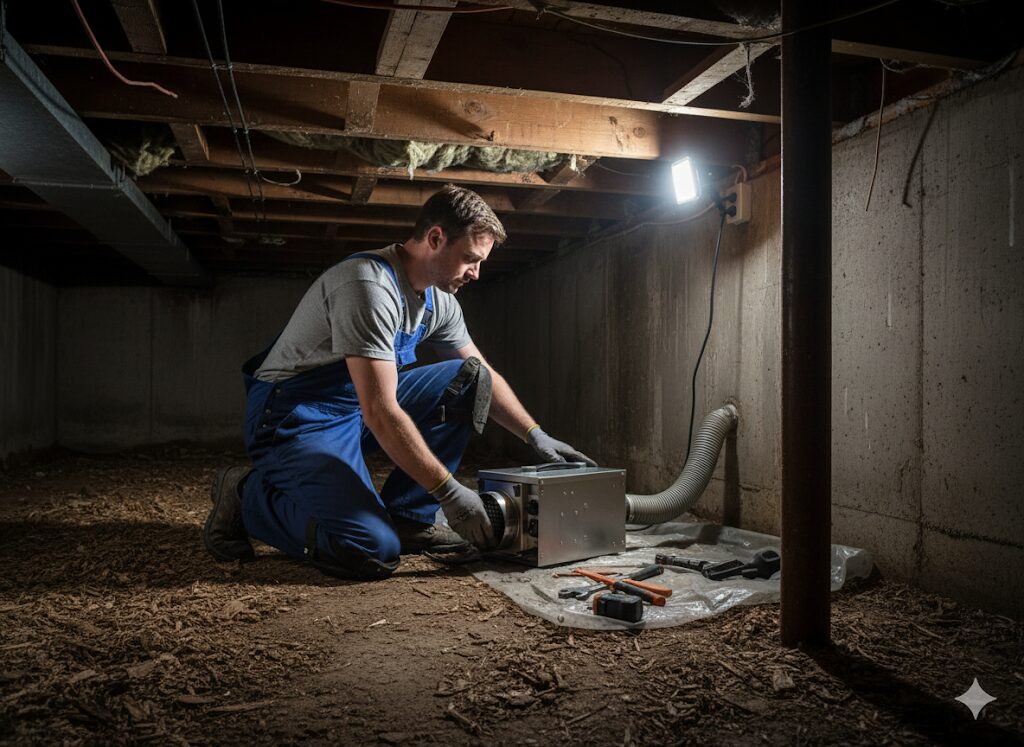
Crawlspaces present unique challenges: tight access hatches, often dirt floors, and extreme dampness. Standard dehumidifiers are not suitable. Instead, you need a crawlspace-specific model. These are typically low-profile, designed to fit through narrow openings, and are built to handle harsh, dusty environments. They are often installed permanently with dedicated drainage.
The Unattended Vacation Property
For a cottage or cabin that is closed up for weeks at a time, a dehumidifier is crucial for preventing mould and mildew. The key features here are reliability, a large capacity to handle long periods of accumulation, and the ability to drain continuously via a hose or pump without needing a bucket emptied.
You can buy expert approved dehumidifiers for basements and basement crawlspaces here at brothers-equipment.com. We offer free shipping across the US and Canada, in-store pickup is also available.
Dehumidifiers are an investment in your home’s health.
Prices in Canada vary based on features and capacity.
Budget-Friendly Options
In the $200 to $350 range, you will find capable smaller units (30-40 pint capacity). These are ideal for tackling moderate moisture problems in smaller areas but typically lack advanced features like a built-in pump.
The Mid-Range Workhorses
The $350 to $600 range is where most homeowners will find the ideal unit. This tier offers larger capacities (50-70 pints), Energy Star certification, built-in pumps, and better warranties. This is the recommended starting point for a standard Canadian basement.
Premium And Specialized Units
For $600 and up, you enter the premium category. This includes extra-high-capacity units for very large spaces, ultra-quiet designs for finished basements, models with smart home connectivity, and dedicated crawlspace dehumidifiers built for toughness and efficiency in extreme conditions.
Proper setup and care will extend the life of your dehumidifier and ensure it runs efficiently.
Always place the unit in a central location, away from walls and furniture, to allow for proper air circulation.
If using continuous drainage, secure the hose and ensure the path is clear and downward for gravity drain, or that the pump hose is routed to an appropriate drain.
For a crawlspace unit, ensure it is placed on a level, elevated surface if the floor is dirt or prone to flooding.
Maintenance is simple but vital. Clean the air filter every month; a clogged filter forces the unit to work harder.
Once a year, give the coils a gentle cleaning with a brush or vacuum to remove dust and maintain energy efficiency. If you store the unit for the winter, ensure it is completely clean and dry, and store it upright in a safe, dry place.
Ignoring a damp basement or crawlspace is more than just an inconvenience; it is a risk to your property and your family’s well-being.
Health Canada explicitly states that indoor humidity levels should be kept below 50 per cent to inhibit mould and mite growth.
Damp environments are a breeding ground for mould spores and dust mites, which are common triggers for allergic reactions and asthma. With over 3.8 million Canadians living with asthma, controlling indoor air quality is a significant health consideration.
Beyond health, moisture is a silent destroyer. It can warp wooden floor joists, rust metal fixtures, cause drywall to crumble, and ruin any valuable items you have stored. Furthermore, moist air is harder to heat and cool.
By removing this excess humidity, your heating system will operate more efficiently in the winter, potentially saving you money on your energy bills—a crucial factor given the cost of utilities across many provinces.
What Is The Ideal Humidity Level For My Basement?
Health Canada recommends keeping indoor humidity levels between 30 per cent and 50 per cent. This range is low enough to prevent mould and dust mite growth but high enough to avoid overly dry air which can cause respiratory irritation.
How Do I Know What Size Dehumidifier I Need?
The size depends on the area’s square footage and how damp it is. Measure your space. A 30-pint unit is good for small, moderately damp areas (up to 1500 sq ft). A 50-pint unit handles larger areas or those that feel wet (up to 3000 sq ft). For very wet and large spaces, opt for 70 pints.
Can I Use A Regular Dehumidifier In My Crawlspace?
It is not recommended. Crawlspaces are harsh environments with dirt, dust, and often cooler temperatures. Crawlspace-specific models are built with tougher components, are low-profile to fit through hatches, and are designed to operate effectively in those conditions.
Is It Cheaper To Run A Dehumidifier Constantly Or In Intervals?
It is more efficient to use the built-in humidistat to let the unit cycle on and off automatically. Running it constantly will remove more water but will use significantly more electricity. Set it to maintain 45-50% humidity for an optimal balance of dryness and efficiency.
Why Does My Dehumidifier Freeze Up?
This happens when the room temperature is too low for the unit to operate. Moisture freezes on the cold evaporator coils. If your space is consistently below 18°C, ensure your model has a reliable auto-defrost feature to prevent this.
Do Dehumidifiers Help With Basement Smells?
Absolutely. Musty odours are caused by mould and mildew growth, which thrive in damp conditions. By removing the moisture they need to live, a dehumidifier effectively eliminates the source of the smell, leaving your basement smelling fresh and clean.
Should I Close The Basement Doors And Windows When Running The Dehumidifier?
Yes, always. Running a dehumidifier with windows open is counterproductive. You are trying to remove moisture from the enclosed space, not the entire outdoors. Keep doors and windows closed to allow the unit to work efficiently.
How Often Do I Need To Empty The Water Bucket?
This depends entirely on the humidity level and the capacity of your unit. In very damp conditions, a small bucket could fill up in less than a day. This is why a continuous drainage hose or a built-in pump is highly recommended for basement use, as it eliminates this chore entirely.
What Is The Average Lifespan Of A Dehumidifier?
The average lifespan of a quality dehumidifier is typically between five and ten years. This can vary greatly based on usage, maintenance (especially filter cleaning), and the conditions in which it operates.
Are There Any Alternatives To A Dehumidifier?
Improving natural ventilation can help slightly, but it is rarely a complete solution, especially during humid Canadian summers. Sealing cracks in foundation walls and ensuring downspouts direct water away from your home’s foundation are critical complementary actions, but they are not replacements for a mechanical dehumidifier in a problematic space.
Choosing the right dehumidifier for your basement or crawlspace is a decisive step toward protecting your home’s structural integrity, improving your indoor air quality, and creating a healthier living environment for your family.
By understanding your space’s specific needs, prioritizing key features like capacity and a condensate pump, and purchasing from a reputable Canadian retailer, you can make an informed investment that will pay dividends in comfort and peace of mind for years to come.
If you have any questions about our article, “Basement Dehumidifier Buyer Guide: Must-Know Tips Before Buying Inside” or need dehumidifiers for your basement, contact us at sales@brothers-equipment.com or connect with us on social media.
Tips On How To Buy A Desiccant Dehumidifier By: Brothers Equipment And Supply Choosing the…
How To Choose The Right Dehumidifier For A Cannabis Grow Operation By: Brothers Equipment And…
Where To Buy Floor Carpet Fans: Must-Know Tips By: Brothers Equipment And Supply Floor carpet…
How Do I Improve Indoor Air Quality And What Can I Buy? By: Brothers Equipment…
10 Reasons Air Movers Are The Unsung Heroes Of Restoration By: Brothers Equipment & Supply…
Where to Find Water Damage Equipment In Toronto? By: Brothers Equipment And Supply Water damage…