 905-243-7435

How To Use Dehumidifiers To Dry Out Water-Damaged Spaces
How To Use Dehumidifiers To Dry Out Water-Damaged Spaces
By: Brothers Equipment & Supply
After a flood, burst pipe, or major spill, removing visible water is only the beginning. Moisture trapped in walls, flooring, and air can continue to cause damage if not properly managed.
Dehumidifiers are one of the most critical tools for drying out water-damaged spaces and preventing mould, odours, and structural issues.
Let’s get right into it!
Assessing The Extent Of Moisture Intrusion
Using Moisture Meters To Measure Content
Moisture meters help identify the level of saturation in building materials such as wood, drywall, and insulation. This data shows where dehumidifiers are needed most and helps determine when the drying process is complete.
Mapping Wet Areas On Walls And Floors
Mapping involves outlining the spread of moisture with markers or blueprints to track how far the water has travelled. This approach ensures that no affected area is missed and allows you to monitor progress over time.
Identifying Hidden Moisture Behind Baseboards
Water can seep behind trim, under flooring, and into wall cavities without being obvious. Removing baseboards and using infrared thermography can reveal hidden pockets of moisture that must be addressed.
Prioritising High-Risk Zones For Equipment Placement
Focus drying efforts on areas with porous materials, like carpet, wood framing, and insulation. These areas are more likely to trap moisture and support mould growth if left untreated.
Selecting And Positioning Dehumidification Equipment
Refrigerant Versus Desiccant Technologies
Refrigerant dehumidifiers are common for home use and work best in warm, humid conditions. Desiccant units use chemical drying agents and excel in cooler temperatures, making them ideal for unheated spaces or winter months.
Calculating Capacity Requirements
Dehumidifier size should match the volume and severity of the moisture present. Units are rated by how much water they remove per day. Choosing a model that is too small may slow the drying process and increase mould risks.
Elevating Units For Improved Circulation
Placing the dehumidifier on a stable, elevated surface allows airflow to reach a broader area. This improves the drying rate and helps prevent stagnant pockets of humid air.
Avoiding Exhaust Blockage And Short-Cycling
Ensure the machine’s exhaust vents are clear from obstructions. If airflow is blocked or the unit cycles on and off too quickly, it will not operate efficiently and could overheat.
Optimising Airflow And Temperature
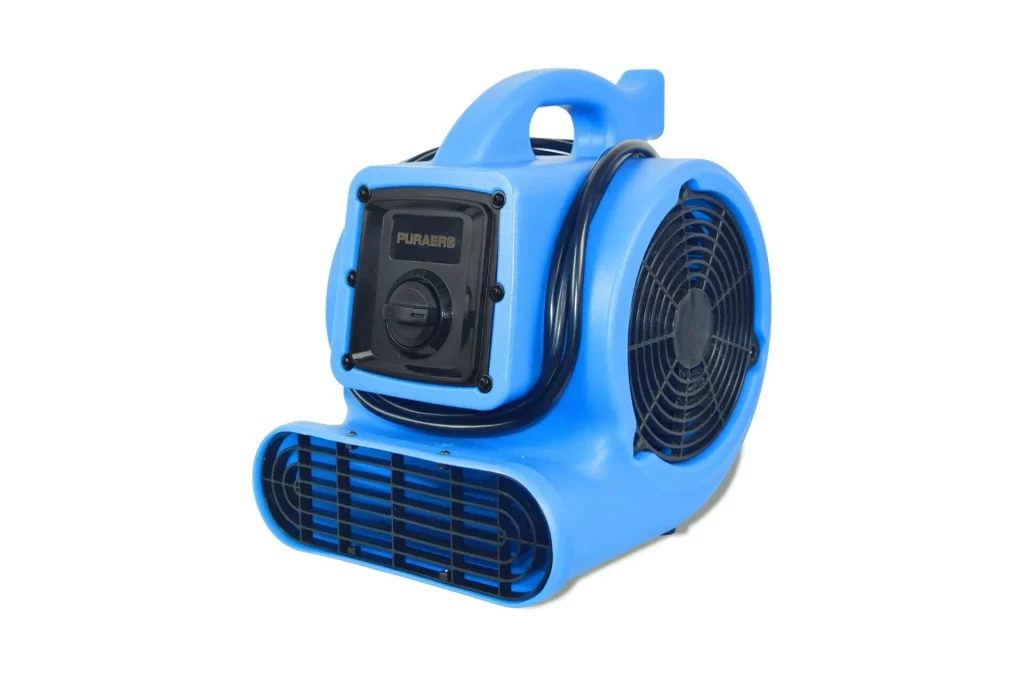
Integrating Axial And Centrifugal Air Movers
Air movers boost the effectiveness of dehumidifiers by directing moist air toward them. Axial fans move air over large areas, while centrifugal models work better for drying behind walls and under flooring.
Maintaining Target Temperature Ranges
Warm air holds more moisture than cold air. Maintaining indoor temperatures within a comfortable range speeds up evaporation and makes the dehumidifier more effective.
Sealing Doors And Windows To Control Environment
Keep doors and windows closed to prevent outside air from altering humidity levels. Isolating the space creates a controlled environment, ensuring the equipment performs at its best.
Balancing Dehumidifier Output With HVAC Systems
Coordinate with your heating, ventilation, and air conditioning system to avoid overloading circuits or drying too quickly. HVAC systems can assist with air movement and filtration.
Monitoring Progress And Adjusting Strategy
Recording Daily Humidity And Temperature Readings
Keep a log of humidity and temperature readings throughout the drying process. This helps confirm whether conditions are improving and guides decisions about adjusting equipment settings.
Relocating Equipment As Materials Dry
As areas dry out, shift dehumidifiers and air movers to new zones that still contain moisture. This ensures even drying across the entire space and prevents mould from taking hold in overlooked spots.
Recognising When Materials Reach Dry Standard
Use industry guidelines or restoration benchmarks to determine when building materials have returned to acceptable moisture levels. This standard varies depending on the material type and local climate.
Documenting Results For Insurers
Take photographs, meter readings, and written logs to provide your insurance company with proof of proper remediation. This documentation is often required for claim approval.
FAQ
Q: How Many Dehumidifiers Do I Need Per Square Metre?
The number depends on the severity of the water damage, but in many cases, one medium-capacity dehumidifier can handle a moderately affected room. Larger spaces or severe flooding may require multiple units.
Q: Should Doors Be Open Or Closed During Drying?
Keep doors closed to create a sealed environment. This helps maintain consistent humidity and temperature, allowing the dehumidifier to work more efficiently.
Q: Can I Dry Hardwood Floors Without Removing Them?
Yes, in some cases. If moisture has not reached the subfloor, surface-level drying may be sufficient. Otherwise, more invasive methods like floorboard removal may be necessary.
Q: How Often Should I Log Readings?
Record humidity and temperature at least once daily. More frequent monitoring may be required for severe cases or if multiple rooms are affected.
Q: Do I Need To Remove Skirting Boards?
It is often recommended. Removing skirting boards allows access to hidden moisture behind walls and prevents mould growth where airflow is otherwise blocked.
Q: Is A DIY Approach Safe For Large Floods?
Not usually. While small spills or minor leaks can be managed at home, large-scale flooding or contamination often requires professional equipment and expertise.
Q: What Are The Signs Of Secondary Water Damage?
Staining, bubbling paint, sagging drywall, and persistent odours are common signs. These indicate that water has penetrated deeper into materials.
Q: How Long Does Professional Drying Typically Take?
It depends on the severity and materials involved, but drying can take anywhere from a couple of days to over a week. Moisture levels must be monitored throughout.
Q: Will A Household Dehumidifier Suffice?
It may help for minor damage but lacks the power and capacity needed for major remediation. Commercial models are better suited for serious water damage.
Q: What Safety Gear Is Recommended During Drying?
Use gloves, masks, and eye protection when handling wet materials or cleaning affected areas. Mould spores and bacteria can pose health risks.
Conclusion
Using dehumidifiers effectively is a key part of water damage restoration. From assessing the problem to monitoring progress, each step plays a role in protecting your space from long-term damage. Whether handling a minor spill or a major flood, the right use of equipment and strategies can restore comfort, safety, and structure to your environment.
If you have any questions about our article “How To Use Dehumidifiers To Dry Out Water-Damaged Spaces” contact us at sales@brothers-equipment.com or chat with us on LiveChat or social media.
